- Shop A054 / 147-189 Brisbane Road. Biggera Waters, QLD 4216
- admin@htdoctors.com.au
- Contact: 07 5222 7117

We Are Open 7 Days a Week
Monday to Friday 8:30am to 5:00 pm
Saturday & Sunday 9:00am to 1:00pm
Walk-Ins Welcome
Dangerous Skin Changes You Should Never Ignore
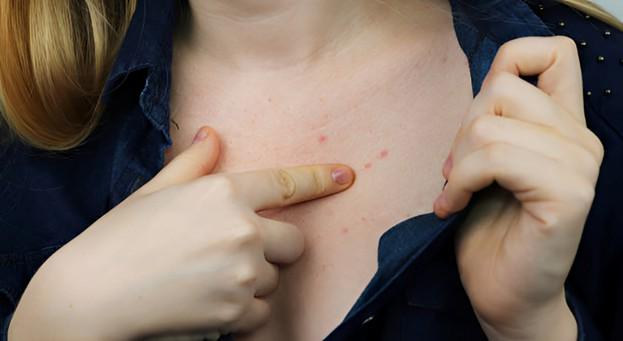
Australia has one of the highest rates of skin cancer in the world, and here on the Gold Coast, the risk is even greater. Most skin cancers are highly treatable when found early, but many Australians miss the warning signs until it is too late. At Harbour Town Doctors, we want every patient to know which skin changes deserve immediate attention.
Table of Contents
Key Takeaways
- Australia leads the world in skin cancer rates: Queensland consistently records the highest melanoma incidence in the country, and the Gold Coast sits within that high-risk zone.
- Most skin cancers are treatable when caught early: Five-year survival for melanoma exceeds 90 per cent when detected at an early stage. Early presentation to your GP makes all the difference.
- Know the ABCDE warning signs: Asymmetry, Border, Colour, Diameter, and Evolution are the five key markers to watch for in any mole or spot on your skin.
- Skin changes are not always obvious: Many dangerous skin conditions do not look dramatic. Some present as a pale or pearly patch, a persistent sore, or simply a spot that bleeds with minor contact.
- A regular professional skin check is your best protection: Self-examination has limits. A trained GP with a dermatoscope can identify changes that are impossible to detect with the naked eye alone.
Why Skin Health Matters More in Queensland
Living on the Gold Coast means year-round sun exposure. It means outdoor sport, beach days, and daily commutes in a climate that delivers UV radiation at levels that would be considered extreme in most parts of the world. For long-term residents, that exposure accumulates silently over decades before it presents as something visible on the skin.
The statistics make for sobering reading. According to Cancer Council Australia’s national skin cancer data, melanoma is the third most commonly diagnosed cancer in Australia, and in 2024 it was estimated that nearly 19,000 Australians would be diagnosed with melanoma, with 1,340 deaths expected from the disease that year.
Queensland has the highest rates of skin cancer in the world. Research published in the Australasian Journal of Dermatology documented melanoma incidence in North Queensland exceeding 78 cases per 100,000 people per year, surpassing all other regions nationally and internationally. For people living and working outdoors in South East Queensland, that context matters deeply.
The ABCDE Rule: Your Starting Point for Skin Checks
The most widely used tool for assessing potentially dangerous skin changes is the ABCDE rule. It gives you a structured way to examine moles, spots, and lesions and determine whether they warrant medical assessment.
As published by Melanoma Institute Australia on checking your skin, the ABCDE criteria are:
- A — Asymmetry: One half of the spot does not match the other when divided along any axis. Symmetrical moles are less concerning. Asymmetrical ones warrant attention.
- B — Border: The edges of a concerning spot are often uneven, ragged, notched, or blurred. A mole with clean, well-defined borders is less likely to be malignant.
- C — Colour: Variable or uneven colour within a single spot is a skin cancer warning sign. This includes differing shades of brown or black, and sometimes patches of red, white, or blue within the same lesion.
- D — Diameter: Any spot larger than 6 mm in diameter should be assessed by a doctor. That said, melanomas can also present at smaller sizes, particularly nodular melanoma, which is among the most dangerous subtypes.
- E — Evolution: This is arguably the most important criterion. Any spot that is changing in size, shape, colour, or texture, or that begins itching, bleeding, or crusting, must be seen by a doctor promptly.
It is important to understand that not all melanomas follow this pattern. Some present without any classic ABCDE features. This is why professional skin examination remains essential alongside self-checks.
Skin Changes That Should Never Wait
Beyond the ABCDE rule, there are several specific skin changes that require prompt medical review. Some of these are associated with melanoma, others with basal cell carcinoma (BCC) or squamous cell carcinoma (SCC), both of which are far more common than melanoma but can cause significant harm if neglected.
A spot or sore that does not heal
Basal cell carcinoma often presents as a small pearly or skin-coloured bump that refuses to heal. It may crust, bleed, or scab repeatedly. Many patients mistake it for a pimple or minor skin irritation and wait months before seeking help. BCC often has no symptoms in early stages and tends to grow slowly, but between 95 and 99 per cent of all skin cancers in Australia are caused by sun exposure. Ignoring a persistent sore on sun-exposed skin is a genuine risk.
A new mole or spot after the age of 40
Most moles develop during childhood and early adulthood. A brand-new pigmented spot appearing on an adult after the age of 40 warrants professional assessment. It does not necessarily indicate cancer, but it should not be dismissed without examination.
A mole that bleeds without injury
Spontaneous bleeding from a mole or spot, without any trauma or scratching, is a concerning sign. It suggests abnormal cellular activity in the lesion and should be examined as a matter of urgency, not convenience.
Rapid changes over weeks rather than months
Nodular melanoma is one of the most dangerous subtypes precisely because it can grow from a small, inconspicuous bump to a thick, invasive lesion within weeks rather than months. Research on melanoma self-check limitations, cited a Gold Coast-based skin cancer doctor who noted that many patients with melanoma were completely unaware they had it, and that the melanomas detected during professional skin checks were generally small in size, making self-detection extremely challenging.
Dark streaks beneath fingernails or toenails
Subungual melanoma, a form of melanoma that develops under the nail, is easy to overlook or mistake for bruising. A dark streak under a nail that persists, grows, or extends to the surrounding skin should be assessed by a doctor.
The Limits of Self-Examination
Monthly self-skin checks are encouraged and valuable. They help you track changes over time and bring new or evolving spots to your doctor’s attention sooner. But they have real limitations.
Research published in the Medical Journal of Australia on evidence-based skin checks, highlights the need for more systematic and targeted approaches to melanoma screening in Australia. The article notes that GPs trained in skin examination using dermoscopy can identify melanomas that are simply not visible to the naked eye, including lesions less than 6 mm in diameter.
Spots on the scalp, back, and posterior legs are particularly difficult to self-examine. Having a partner or family member assist with these areas improves detection, but professional examination remains superior for high-risk individuals.
Skin cancer clinic at Harbour Town Doctors offers thorough skin checks using dermoscopy, with same-day assessment for patients who identify a concerning change. Early detection saves lives, and we make it as accessible as possible for our Gold Coast community.
Not every new lump is a worry. Skin tags, warts and many moles are harmless, but it is still worth having them checked before anyone removes them. Our guide to skin tag, mole and wart removal on the Gold Coast explains how that works and what it costs.
Conclusion
If you have noticed a skin change that concerns you, whether it is a new mole, an old one that has shifted, a sore that is not healing, or anything that simply does not seem right, please do not delay. Contact us and book a skin check with one of our experienced GPs. We are here at Biggera Waters, serving the Gold Coast community with thorough, accessible skin cancer care.
FAQs:
Any new or changing mole, a sore that does not heal, spontaneous bleeding, or a spot following the ABCDE warning signs needs prompt assessment.
Annually for most adults, and more frequently if you have a personal or family history of skin cancer or multiple atypical moles.
Early melanoma often appears as an asymmetric, irregularly bordered spot with uneven colour, sometimes no larger than a few millimetres across.
Yes, but it is less common. UV exposure from the sun is responsible for 95 to 99 per cent of skin cancers diagnosed in Australia.
BCC rarely spreads to other parts of the body, but it can grow into surrounding tissue and cause significant damage if left untreated for a long period.
Yes. Regular, adequate application of SPF50 or higher broad-spectrum sunscreen significantly reduces the risk of developing squamous cell carcinoma and melanoma.
Quick Links
Contact Info
-
Harbour Town Premium Outlets.
Shop A054 / 147-189 Brisbane Road.
Biggera Waters, QLD 4216 - 07 5222 7117
- 07 5222 7112
- admin@htdoctors.com.au
-
Mon to Fri - 8:30am to 5:00pm
Sat and Sun - 9:00am to 1:00pm
Medical Centre Near Me
24 Hour Medical Centre Near Me
Bulk Billing Medical Centre Near Me
After Hours GP Near Me
GP Near Me
Best Doctors Gold Coast
Doctors Near Me
Bulk Billing Doctor Near Me
Bulk Bill Doctors Near Me
Female Doctors Near Me
Sexual Health Clinic Near Me
Women’s Health Clinic Near Me
Cosmetic Fillers Near Me

At Harbour Town Doctors, we have been providing comprehensive medical care to patients, utilising a team of experienced doctors and allied healthcare professionals through a continuous envelope of personalised care.
Quick Links
Contact Info
-
Harbour Town Premium Outlets.
Shop A054 / 147-189 Brisbane Road.
Biggera Waters, QLD 4216 - 07 5222 7117
- 07 5222 7112
- admin@htdoctors.com.au
-
Mon to Fri - 8:30am to 5:00pm
Sat and Sun - 9:00am to 1:00pm
Medical Centre Near Me
24 Hour Medical Centre Near Me
Bulk Billing Medical Centre Near Me
After Hours GP Near Me
GP Near Me
Best Doctors Gold Coast
Doctors Near Me
Bulk Billing Doctor Near Me
Bulk Bill Doctors Near Me
Female Doctors Near Me
Sexual Health Clinic Near Me
Women’s Health Clinic Near Me
Cosmetic Fillers Near Me
Harbour Town Doctors © 2026. All rights reserved.